

Table of Contents
ToggleHard water is more than just spotted glassware and soap scum around faucets. It’s a silent drain on appliances, plumbing, and your wallet. If you’ve noticed white mineral buildup on fixtures, stiff laundry, or a dishwasher that quits after five years instead of ten, chances are you’re dealing with hard water. Aquasana offers a water conditioning system aimed at homeowners who want the benefits of soft water without the environmental footprint and maintenance of traditional salt-based softeners. This guide walks through how the Aquasana water softener works, what sets it apart from conventional systems, and whether it’s the right fit for your home’s needs.
Key Takeaways
- The Aquasana water softener uses salt-free crystallization technology to prevent mineral scale buildup on fixtures and appliances without adding sodium to your drinking water.
- Unlike traditional ion-exchange systems, Aquasana SimplySoft doesn’t remove hardness minerals—it neutralizes them, allowing you to retain beneficial calcium and magnesium in your water supply.
- Aquasana systems require no salt, electricity, or drainage, making installation flexible and long-term maintenance minimal with media replacement needed only every 6–8 years.
- For moderate hardness levels (5–15 grains per gallon), Aquasana is more cost-effective over 10 years than salt-based softeners, saving money on salt purchases and wastewater regeneration cycles.
- Professional installation ($150–$350) is recommended if you have galvanized pipes or are unfamiliar with local plumbing codes, though experienced DIYers can complete the installation as a weekend project.
- Aquasana is ideal for homes with septic systems or municipal water restrictions on brine discharge, but may not be suitable if hardness exceeds 15 grains per gallon or your household exceeds 7 gallons per minute peak demand.
What Is the Aquasana Water Softener and How Does It Work?
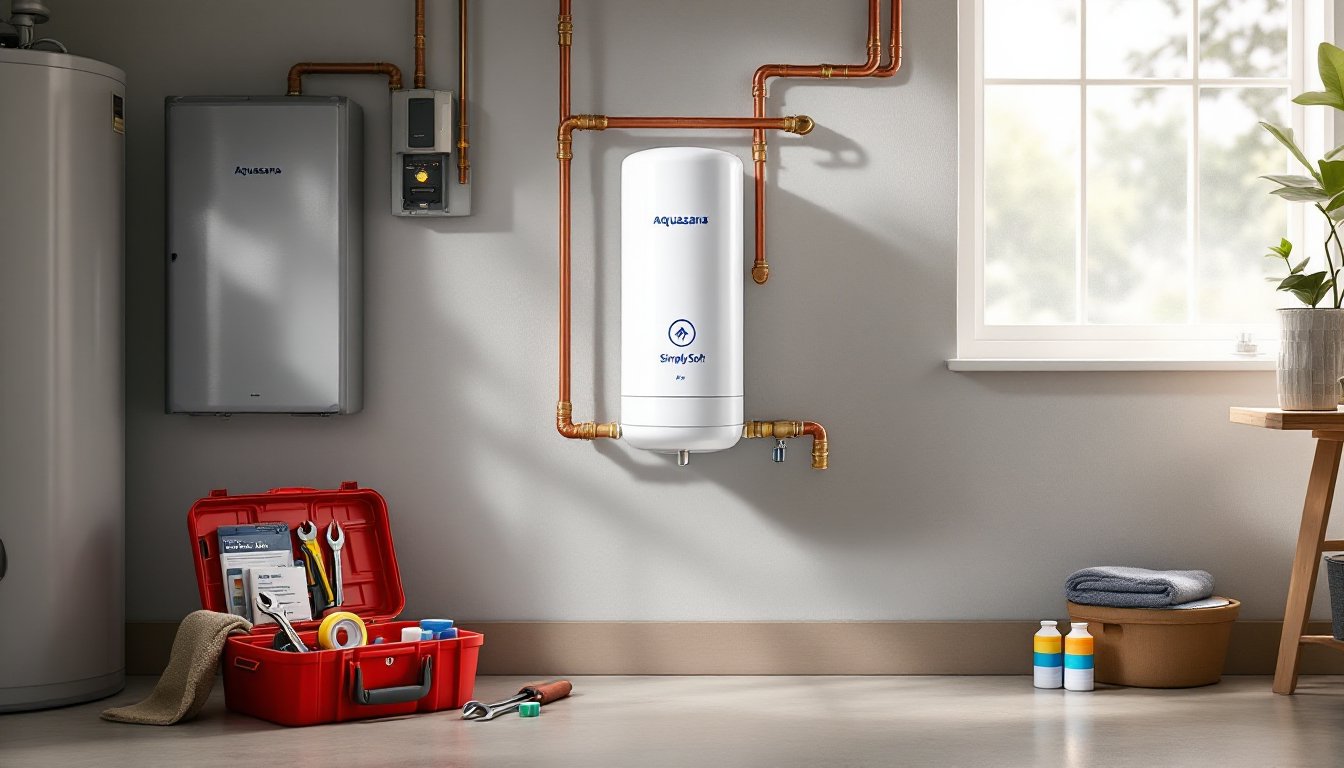
Aquasana’s primary water conditioning product is the SimplySoft salt-free water softener. Unlike conventional ion-exchange systems that remove calcium and magnesium ions, SimplySoft uses a process called salt-free conditioning (also known as template-assisted crystallization or TAC). The system doesn’t technically “soften” water in the chemical sense, it doesn’t reduce total dissolved solids (TDS) or change the water’s hardness reading. Instead, it alters the structure of mineral particles so they don’t adhere to surfaces.
Here’s the mechanism: As hard water passes through the SimplySoft media, calcium and magnesium ions form microscopic crystals. These neutralized crystals stay suspended in the water rather than bonding to pipes, fixtures, or heating elements. You won’t see the same scale buildup that clogs aerators and shortens appliance lifespans, but a water hardness test kit will still show the same mineral content.
The distinction matters. If you need laboratory-soft water for industrial processes or extreme scaling conditions, a salt-based system is the better choice. But for most residential applications, protecting plumbing, reducing soap usage, and keeping fixtures cleaner, Aquasana’s approach delivers comparable results without adding sodium to your water supply or requiring drain lines for backwash cycles.
Key Features and Benefits of Aquasana Water Softening Systems
SimplySoft is designed for whole-house integration, typically rated for homes with 1–3 bathrooms and 1–6 people. The system handles flow rates up to 7 gallons per minute (GPM), which covers simultaneous use like a shower running while the dishwasher cycles, adequate for average households but potentially undersized for larger homes with multiple high-demand fixtures.
Key benefits include:
• No salt or potassium required: No lugging 40-pound bags of softener salt, no adding sodium to drinking water, and no environmental concerns about salt discharge into septic systems or watersheds.
• No electricity or drainage: The system operates passively with existing water pressure. There’s no need for a floor drain or electrical outlet, making installation more flexible than conventional softeners.
• Compact footprint: Measures roughly 9″ diameter by 46″ height, fitting in tighter spaces like utility closets or garage corners.
• NSF-certified components: The carbon filter media used in combo systems (if you opt for filtration add-ons) is certified to NSF/ANSI Standard 61 for material safety.
One often-overlooked advantage: because SimplySoft doesn’t strip minerals, you retain the trace calcium and magnesium in drinking water, elements that contribute to daily mineral intake. Traditional softeners replace these with sodium, which isn’t ideal if you’re monitoring salt consumption for health reasons.
The tradeoff? You won’t get the slick “soft” feel in the shower that some people associate with ion-exchange softeners. That sensation comes from a slight residue of soap that doesn’t rinse away in chemically softened water. SimplySoft-treated water rinses cleaner, which feels different but isn’t a performance issue.
Aquasana SimplySoft vs. Traditional Salt-Based Softeners
Traditional ion-exchange softeners use resin beads to swap calcium and magnesium ions for sodium or potassium. The process removes hardness minerals entirely, lowering TDS and producing chemically soft water. These systems regenerate on a timer or demand basis, flushing spent resin with brine and sending waste water down the drain, typically 25–65 gallons per regeneration cycle.
Comparison breakdown:
| Feature | Aquasana SimplySoft | Salt-Based Softener |
|---|---|---|
| Method | Template-assisted crystallization | Ion exchange |
| Hardness removal | No (minerals neutralized, not removed) | Yes (minerals replaced with sodium) |
| Salt/chemicals | None | 40–80 lbs/month (varies by usage) |
| Wastewater | None | 25–65 gallons per regen |
| Power required | No | Yes (most models) |
| Maintenance | Media replacement every 6–8 years | Salt refills, periodic resin cleaning |
| Drinking water sodium | None added | Increases proportionally to hardness |
| Upfront cost | ~$600–$900 | ~$400–$2,500+ |
Salt-based systems excel in extreme hardness scenarios (20+ grains per gallon) where scale prevention is critical for boilers, tankless water heaters, or commercial equipment. They’re also the only option if you genuinely need low-TDS water.
Aquasana’s approach fits homeowners who want scale protection without the ongoing costs and environmental impact of salt. It’s particularly appealing if you have a septic system (salt can disrupt bacterial balance) or live in areas with municipal water restrictions on softener discharge.
Installation Process: DIY or Professional Setup?
SimplySoft is marketed as DIY-friendly, and for experienced homeowners comfortable with basic plumbing, it’s a manageable weekend project. The system installs on the main water line after the pressure regulator and before any branch lines, typically in a garage, basement, or utility room.
What you’ll need:
• Pipe cutter or hacksaw
• Adjustable wrenches (10″ and 12″)
• Teflon tape or pipe thread sealant
• Measuring tape
• Two threaded adapters (brass or PEX, matching your pipe type, 3/4″ or 1″ NPT)
• Optional: PEX crimper or SharkBite fittings if working with PEX supply lines
Basic steps:
- Shut off the main water supply and open a downstream faucet to relieve pressure.
- Cut the main line where you’ll install the unit, leaving enough clearance above for filter cartridge changes (plan for ~6″ of vertical space).
- Install threaded adapters on each cut end. For copper, sweat-solder the adapters. For PEX, use crimp or clamp fittings. For CPVC, use primer and cement.
- Thread the SimplySoft inlet and outlet ports onto the adapters, applying Teflon tape to male threads (wrap clockwise, 3–4 wraps).
- Check orientation: the inlet is typically marked with an arrow. Flow direction matters, reversed installation won’t condition water properly.
- Restore water slowly, watching for leaks at connections. Tighten as needed, but don’t over-torque plastic components.
When to call a pro:
If your main line is galvanized steel, has existing corrosion, or you’re unfamiliar with local plumbing code (some jurisdictions require backflow prevention or permits for whole-house devices), hire a licensed plumber. Most installs run $150–$350 for labor, depending on access and pipe material. Many homeowners find professional installation worthwhile for peace of mind, especially if they’re adding a pre-filter or multi-stage system.
Always wear safety glasses when cutting pipe, and keep a bucket and towels handy, residual water in lines will spill.
Maintenance Requirements and Long-Term Costs
SimplySoft’s low-maintenance design is a selling point, but “low” doesn’t mean zero.
Primary maintenance:
• Media replacement: The conditioning media typically lasts 6–8 years under normal use. Replacement cartridges run $150–$200 and swap out in about 15 minutes (shut off water, unscrew housing, swap media, reassemble).
• Pre-filter changes (if installed): Aquasana offers optional sediment and carbon pre-filters. Sediment filters (5–20 micron) should be swapped every 2–3 months if you have well water or visible particulates: carbon filters last 6–12 months. Budget $50–$100/year for replacement cartridges.
No other consumables required, no salt, no potassium, no cleaning chemicals.
Cost comparison (10-year ownership):
| Expense | Aquasana SimplySoft | Typical Salt Softener |
|---|---|---|
| System cost | $600–$900 | $500–$2,000 |
| Installation (pro) | $150–$350 | $200–$500 |
| Annual consumables | $50–$100 (filters) | $150–$300 (salt) |
| Electricity (10 yrs) | $0 | ~$50–$100 |
| Total 10-year | ~$1,400–$2,250 | ~$2,200–$4,500 |
The math favors Aquasana for moderate hardness levels, especially when you factor in water and energy savings from eliminating regeneration cycles.
One caveat: if you live in an area with exceptionally high hardness (above 15 grains per gallon), the conditioning media may saturate faster, requiring more frequent replacement. Testing by independent home product reviewers suggests performance holds steady up to about 10–12 grains per gallon: beyond that, a hybrid approach (SimplySoft plus occasional descaling treatments for appliances) may be necessary.
Is the Aquasana Water Softener Right for Your Home?
SimplySoft is a strong fit if you:
• Have moderate hardness (5–15 grains per gallon / 85–255 ppm)
• Want to eliminate scale without adding sodium to drinking water
• Use a septic system or live where brine discharge is restricted
• Prefer low-maintenance, set-and-forget systems
• Don’t need ultra-soft water for specific industrial or cosmetic applications
It’s not ideal if:
• Hardness exceeds 15 grains per gallon consistently, traditional softeners handle extreme conditions better
• You have a large household (4+ bathrooms, 6+ occupants) with peak demand over 7 GPM, you’ll need a higher-capacity system or multiple units
• You specifically want the “slippery” feel of ion-exchanged soft water
• You need to meet equipment warranties that specify TDS or hardness thresholds (some tankless water heater manufacturers void warranties if hardness isn’t reduced below a certain level)
Before committing, test your water. Home test kits cost $10–$25 and measure hardness, iron, pH, and TDS. If you’re on municipal water, your utility publishes annual water quality reports online. For well water, a lab analysis (around $50–$150) gives precise mineral content and flags issues like iron bacteria or sulfur that require separate treatment.
If you’re unsure about system sizing or compatibility, local service providers can assess your water, inspect your plumbing, and recommend solutions tailored to your home’s layout and usage patterns. Many offer free consultations and side-by-side comparisons of conditioning versus traditional softening.
Conclusion
Aquasana’s SimplySoft delivers effective scale prevention without the salt, wastewater, and ongoing hassle of conventional softeners. It’s a practical middle ground for homeowners who want cleaner fixtures, longer appliance life, and healthier drinking water, without the chemical footprint. If your water hardness is moderate and you’re comfortable with straightforward plumbing work, SimplySoft is a solid investment that pays for itself in reduced maintenance and soap savings. Just make sure your household’s flow rate and hardness level align with the system’s capacity before you commit.

