

Table of Contents
ToggleIf you own a Nalgene bottle, you’ve probably wondered whether tossing it in the dishwasher is safe or if you’re risking damage. These iconic bottles are built to last, but even tough materials have their limits. The short answer: most Nalgene bottles are technically dishwasher safe, but there are important caveats depending on the material and how you run the cycle. This guide walks through what you need to know about dishwasher compatibility, best practices, and when hand washing makes more sense. Whether you’re cleaning a well-used hiking bottle or maintaining a brand-new purchase, understanding the right approach keeps your Nalgene performing well for years.
Key Takeaways
- Most Nalgene bottles are dishwasher safe when placed on the top rack with standard wash cycles, but bottom rack and sanitize cycles should be avoided to prevent warping and cloudiness.
- Tritan and polypropylene Nalgene bottles tolerate dishwasher heat better than older polycarbonate models, which are safer to hand wash due to potential BPA leaching concerns.
- Always remove and hand wash lids, flip-tops, gaskets, and straws separately, as these components can warp, lose their seal, or get lost in the dishwasher filter.
- Rinse bottles immediately after use and use mild detergent with air drying to prevent staining and cloudiness—harsh detergents and heated dry cycles accelerate plastic degradation.
- Hand washing with a bottle brush and baking soda paste is more effective for heavy staining and better preserves the long-term clarity and longevity of your Nalgene bottle.
- Hard water mineral deposits and detergent residue are common causes of cloudiness; use vinegar soaks or rinse aids to prevent this issue and maintain your bottle’s appearance.
Understanding Nalgene Materials and Dishwasher Compatibility
Nalgene manufactures bottles from several different plastics, and not all of them respond the same way to dishwasher heat. The most common materials are Tritan copolyester, polypropylene (PP), and the older polycarbonate formulations (phased out in 2008 due to BPA concerns).
Tritan is the workhorse of the current Nalgene lineup. It’s a BPA-free copolyester engineered to resist staining, retain clarity, and handle repeated thermal cycling. Tritan bottles can withstand dishwasher temperatures up to about 212°F (100°C), which covers most residential dishwasher cycles. That said, prolonged exposure to high heat, especially in commercial or sanitizing cycles, can degrade the material over time, causing cloudiness or brittleness.
Polypropylene bottles are typically used for narrow-mouth or specialty Nalgene models. PP is more heat-resistant than Tritan and can tolerate higher temperatures without warping. These bottles are generally safe for the dishwasher, though they may develop surface wear faster than Tritan if subjected to harsh detergent and heat repeatedly.
If you’re still using an older polycarbonate Nalgene (pre-2008), be cautious. While polycarbonate is technically dishwasher safe, repeated high-heat exposure can accelerate the breakdown of the plastic and potentially increase BPA leaching. Hand washing with warm water is the safer route for vintage bottles.
Check the recycling code on the bottom of your bottle: #7 (Tritan or older polycarbonate), #5 (polypropylene), or occasionally #2 (HDPE). When in doubt, the Nalgene website lists material specs by product line.
Official Nalgene Dishwasher Safety Guidelines
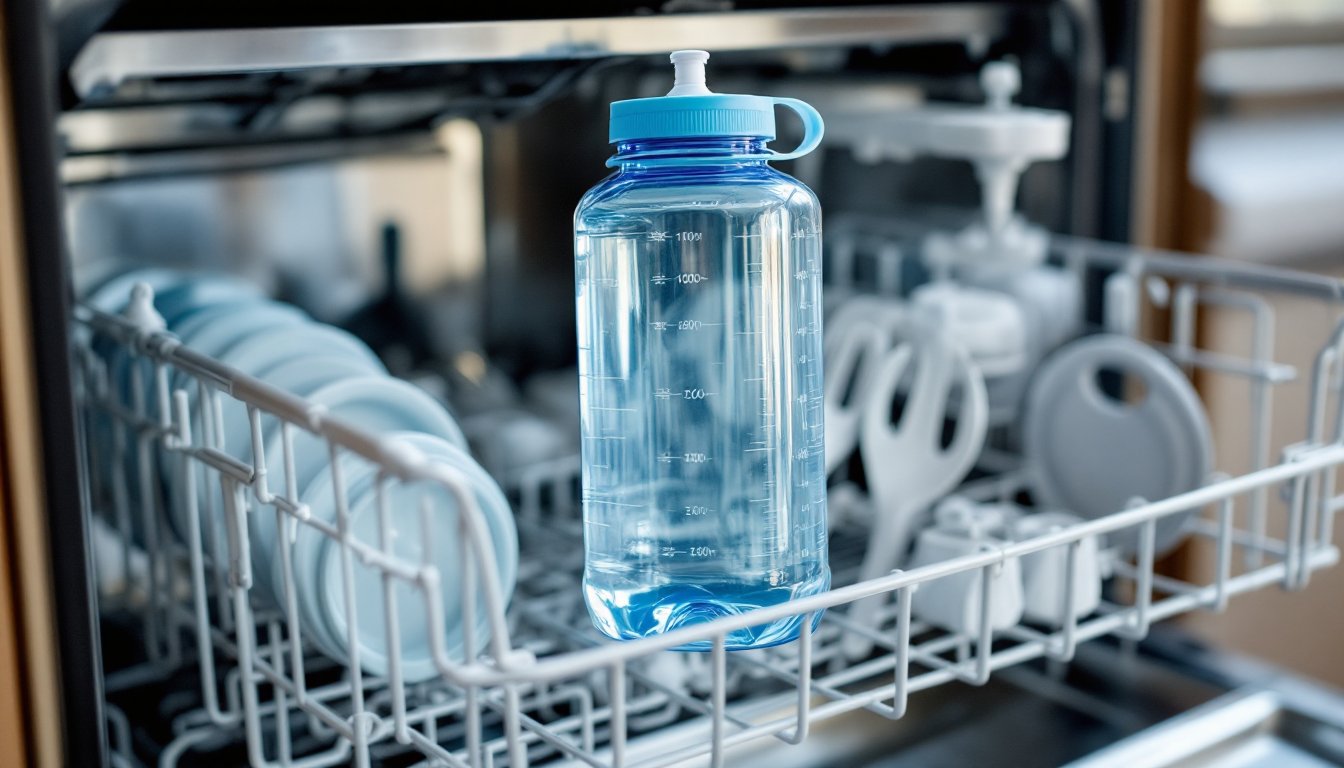
Nalgene’s official care instructions state that their bottles are top-rack dishwasher safe. This applies to Tritan and polypropylene models. The company explicitly advises against placing bottles on the bottom rack, where heating elements and higher water temperatures can cause warping, cloudiness, or even melting in extreme cases.
For lids and caps, Nalgene recommends the top rack as well. The silicone gaskets and threaded caps can deform or lose their seal if exposed to direct heat from the bottom rack. If your bottle has a flip-top, straw, or integrated filter, remove these components before washing. Many of these parts are not designed for dishwasher heat and should be hand washed separately.
Nalgene also notes that sanitize or high-temp cycles should be avoided. Standard wash and dry cycles are sufficient for cleaning. Sanitize cycles on many dishwashers reach 150–165°F, which exceeds the long-term safe threshold for Tritan and can cause premature aging of the plastic.
It’s worth noting that some water bottles on the market are tested specifically for dishwasher durability, and Nalgene consistently ranks well in independent reviews for maintaining structural integrity after repeated washing. Still, following the manufacturer’s guidelines extends the life of any reusable bottle, regardless of brand reputation.
Best Practices for Washing Nalgene Bottles in the Dishwasher
If you’re going to use the dishwasher, a few simple steps keep your Nalgene looking clear and functioning properly.
First, rinse the bottle immediately after use. Dried-on residue from sports drinks, coffee, or protein shakes is harder to remove in a dishwasher and can bake onto the plastic during the drying cycle. A quick rinse takes five seconds and prevents most stubborn staining.
Second, disassemble the bottle completely. Remove the lid, unscrew any flip-top mechanisms, and pull out gaskets or straws. Place small parts in a dishwasher-safe mesh bag or on the top rack away from the heating element. Gaskets are notorious for falling through dishwasher racks and ending up in the filter trap.
Third, use a mild detergent. Avoid gel packs with added degreasers or oxygen boosters designed for baked-on food. These formulas can be overly aggressive on plastic, leading to surface etching or cloudiness. A standard powder or liquid dishwasher detergent works fine.
Fourth, skip the heated dry cycle if possible. Air drying is gentler on plastic. If your dishwasher has an “air dry” or “energy saver” option, use it. If not, crack the door open as soon as the wash cycle finishes and let bottles air dry on the rack.
Top Rack vs. Bottom Rack Placement
Always use the top rack. The bottom rack sits closer to the dishwasher’s heating element, which can reach 140–160°F during wash and significantly higher during drying. Tritan and polypropylene can warp, lose shape, or develop a cloudy film when exposed to sustained bottom-rack heat.
Place bottles upside down in the top rack to ensure water drains out completely. If your dishwasher has adjustable tines, angle them to hold the bottle securely without pinching the threads or mouth. Bottles that shift during the cycle can trap dirty water or detergent residue inside.
For wide-mouth Nalgene bottles, secure them between tines or use a bottle clip if your dishwasher came with one. Narrow-mouth bottles fit more easily but can still tip over if not positioned correctly. A tipped bottle collects water and defeats the purpose of the wash.
When Hand Washing Is the Better Option
There are situations where the dishwasher isn’t the best tool, even if your Nalgene is technically compatible.
If your bottle has heavy staining from coffee, tea, or colored sports drinks, hand washing with a bottle brush and a paste of baking soda and warm water is more effective. Let the paste sit for 10–15 minutes, scrub thoroughly, and rinse. The dishwasher won’t penetrate stains the way manual scrubbing does.
Bottles with narrow necks or complex lids (such as OTF caps or integrated filters) benefit from hand washing. Dishwasher spray arms don’t always reach into tight crevices, and residue can build up in threads, valves, or straw mechanisms. Use a small brush or pipe cleaner to clean valve openings and straw interiors.
If you’re concerned about longevity, hand washing reduces cumulative thermal stress. Tritan is durable, but every dishwasher cycle is a micro-test of the material’s heat tolerance. For bottles you want to keep crystal-clear for years, lukewarm water and dish soap extend their lifespan.
Finally, if you’re camping or off-grid, hand washing is obviously your only option. A drop of biodegradable soap, some clean water, and a quick shake with a handful of pebbles or sand works surprisingly well for field cleaning. Rinse thoroughly to avoid soap taste.
Safety note: Always wear gloves if using bleach solutions or abrasive cleaners. Prolonged skin contact with cleaning agents can cause irritation.
Common Dishwasher-Related Issues and How to Prevent Them
Even when following guidelines, some problems crop up. Here’s how to troubleshoot and prevent the most common dishwasher-related issues.
Cloudiness or haze: This is the most frequent complaint. It’s usually caused by mineral deposits from hard water or residue from dishwasher detergent. To fix it, fill the bottle with a 50/50 mix of white vinegar and warm water, let it sit overnight, then scrub with a bottle brush. Prevent recurrence by using a rinse aid in your dishwasher or switching to a detergent formulated for hard water.
Warping or deformation: If your bottle looks slightly misshapen after a wash, you likely used the bottom rack or a sanitize cycle. Once plastic warps, it’s difficult to reverse. Slight warping may not affect function, but severe deformation compromises the seal between lid and bottle. Replace the bottle if it no longer holds liquid without leaking.
Lingering odors: Dishwashers don’t always eliminate smells from strong-flavored drinks. After washing, fill the bottle with warm water and a tablespoon of baking soda, shake, and let it sit for a few hours. Rinse thoroughly. For stubborn odors, try a diluted bleach solution (1 teaspoon bleach per quart of water), but rinse multiple times to remove all bleach residue. Never mix bleach with other cleaners, as this can produce toxic fumes.
Lost or damaged gaskets: Silicone gaskets can fall out during the wash cycle and get lodged in the dishwasher’s filter or drain. Always place small parts in a mesh bag or hand wash them separately. Replacement gaskets are available from Nalgene or third-party suppliers, but they’re easier to keep than to replace.
Detergent residue: If you notice a film or soapy taste, your dishwasher may be overloading detergent or not rinsing thoroughly. Run an empty bottle through a rinse-only cycle, or hand rinse after the dishwasher finishes. Check your dishwasher’s detergent dispenser for clogs or buildup.
Conclusion
Nalgene bottles are dishwasher safe when used correctly, top rack, standard cycle, no sanitize mode. Understanding your bottle’s material and following the manufacturer’s guidelines keeps it clear, odor-free, and functional for the long haul. When in doubt, hand washing with warm water and mild soap is always a safe bet. Take a few extra seconds to disassemble caps and rinse out residue, and your Nalgene will outlast most of the gear in your pack.

