
Table of Contents
ToggleIf your Amana dishwasher isn’t cleaning like it used to, leaving food particles on plates or emitting a stale odor, the culprit is likely a clogged filter. This small component plays a critical role in trapping debris, but it can’t do its job if it’s packed with grease and gunk. The good news? Cleaning an Amana dishwasher filter is a straightforward task that takes about 10 minutes and requires no special tools. This guide walks through exactly where to find the filter, how to clean it properly, and how often maintenance should happen to keep the dishwasher running efficiently.
Key Takeaways
- A clogged Amana dishwasher filter restricts water circulation, causing poor cleaning performance, cloudy dishes, and unpleasant odors within your appliance.
- The Amana dishwasher filter is located at the bottom of the tub beneath the lower spray arm and can be cleaned in about 10 minutes using just soap, warm water, and a soft brush.
- Clean your Amana dishwasher filter monthly for daily use or every two months for light use to prevent bacteria growth, drain clogs, and damage to the pump.
- Replace the filter if the mesh tears, the plastic housing cracks, or the locking mechanism fails—replacement filters cost $15–$40 and are available from Amana or appliance retailers.
- If dishes remain dirty or odors persist after cleaning the filter, check the spray arm holes for mineral deposits and verify the detergent dispenser is functioning properly.
- Regular filter maintenance prevents expensive repairs by keeping water circulation optimal and reducing strain on the dishwasher’s pump and spray arms.
Why Your Amana Dishwasher Filter Needs Regular Cleaning
The dishwasher filter is the first line of defense against food particles, grease, and debris that rinse off dishes during a wash cycle. In most Amana models, this is a manual-clean filter (as opposed to a self-cleaning grinder), which means it traps debris instead of pulverizing it.
When the filter becomes clogged, water can’t circulate properly. That leads to poor cleaning performance, dishes come out dirty, glasses look cloudy, and the bottom of the tub may pool with standing water. A dirty filter also creates an environment for bacteria and mold, which causes unpleasant odors.
Beyond performance, a clogged filter puts extra strain on the dishwasher’s pump and spray arms, potentially shortening the appliance’s lifespan. Regular cleaning prevents these issues and keeps the machine running as designed. It’s a simple preventive step that avoids more expensive repairs down the line.
Where to Find the Filter in Your Amana Dishwasher
The filter assembly in an Amana dishwasher is located at the bottom of the tub, directly beneath the lower spray arm. It’s designed for easy access, no panels to remove, no screws to back out.
Locating the filter:
- Open the dishwasher door and pull out the bottom dish rack completely.
- Look at the floor of the tub. The lower spray arm sits in the center: the filter assembly is directly underneath or adjacent to it.
- The filter is typically a cylindrical or flat mesh component, often with a twist-lock or lift-out design.
Some Amana models have a two-part filter system: an upper cylindrical filter (the fine filter) and a lower flat screen (the coarse filter). Both parts need cleaning. If the lower spray arm is in the way, it may need to be removed first, most Amana spray arms pull straight up or have a small locking tab to release.
Refer to the owner’s manual for model-specific details, but the general location is consistent across Amana’s dishwasher lineup.
Step-by-Step: How to Remove and Clean Your Amana Dishwasher Filter
Cleaning the filter is a hands-on task, but it doesn’t require any tools beyond a soft brush and dish soap. Here’s the process from start to finish.
Materials needed:
- Soft-bristle brush (an old toothbrush works well)
- Dish soap
- Warm water
- Microfiber cloth or sponge
- Optional: white vinegar for stubborn buildup
Step 1: Remove the lower dish rack
Pull the bottom rack all the way out to expose the dishwasher floor.
Step 2: Remove the lower spray arm (if needed)
Some Amana models require removing the spray arm first. Grasp it firmly and pull straight up, or press the locking tab and lift. Set it aside.
Step 3: Unlock and remove the filter assembly
The cylindrical filter typically twists counterclockwise to unlock (about a quarter turn), then lifts straight out. The flat screen filter underneath may lift out separately or be part of the same assembly. Consult your manual if it doesn’t budge, forcing it can crack the plastic.
Step 4: Rinse under warm running water
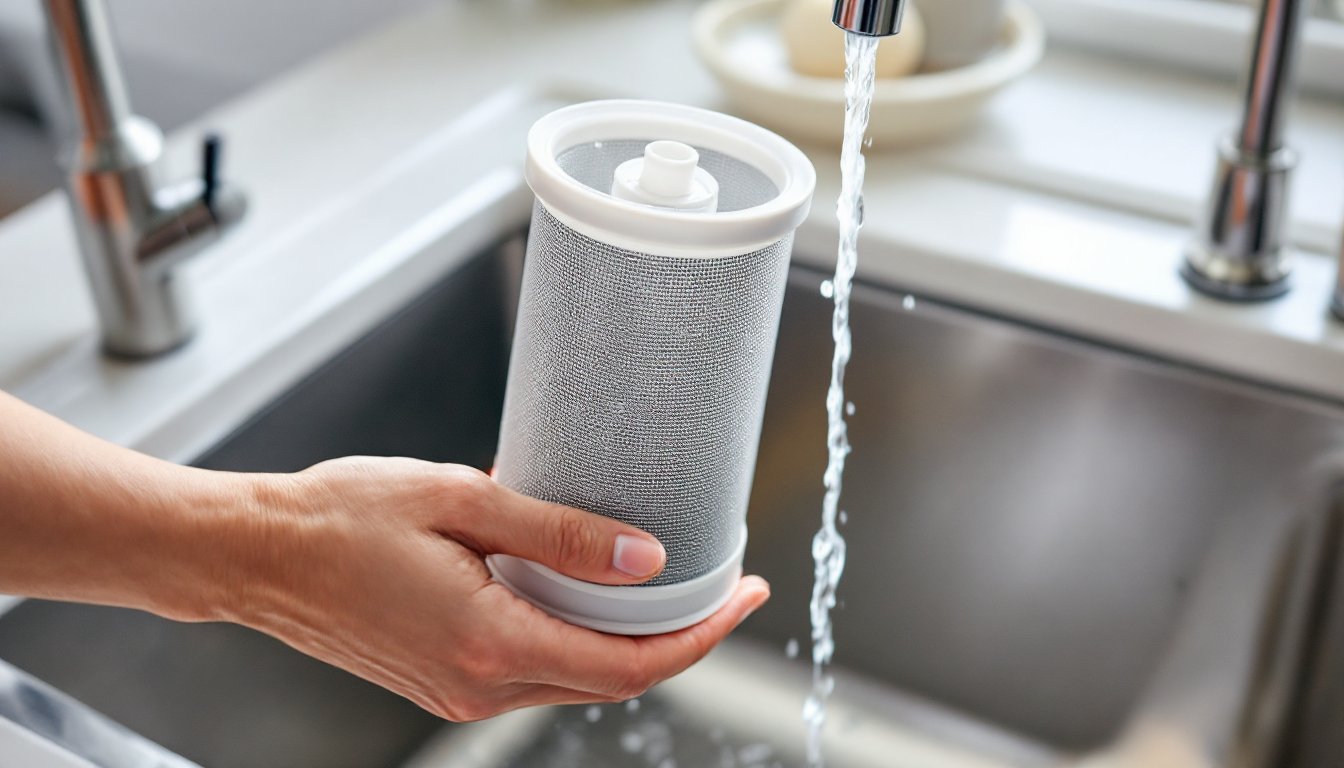
Hold the filter under the faucet and rinse away loose debris. Let the water flow through the mesh from the inside out.
Step 5: Scrub with dish soap and a brush
Apply a few drops of dish soap to the filter. Use the soft-bristle brush to scrub the mesh, paying attention to crevices where grease and food particles accumulate. For the flat screen, scrub both sides.
Step 6: Soak if necessary
If there’s stubborn buildup or a greasy film, soak the filter in a solution of warm water and white vinegar (1:1 ratio) for 10–15 minutes, then scrub again.
Step 7: Rinse and inspect
Rinse thoroughly to remove all soap and debris. Hold the filter up to a light source, if you can see through the mesh clearly, it’s clean.
Step 8: Clean the filter housing
Before reinstalling, wipe out the filter cavity at the bottom of the tub with a damp cloth. Remove any debris that’s settled there.
Step 9: Reinstall the filter and spray arm
Place the flat screen back first (if separate), then insert the cylindrical filter and twist clockwise to lock. If the spray arm was removed, press it back into place until it clicks.
Step 10: Run a rinse cycle
Close the door and run a short rinse cycle to ensure everything is seated properly and water flows freely.
Safety note: No PPE is required for this task, but wearing rubber gloves is a good idea if handling greasy or moldy buildup.
How Often Should You Clean Your Amana Dishwasher Filter?
Frequency depends on usage and what’s being washed. As a general rule, clean the filter once a month for households running the dishwasher daily. If the machine is used less frequently, say, a few times a week, cleaning every two months is usually sufficient.
Households that rinse dishes before loading can often stretch the interval slightly, but filters still accumulate grease and mineral deposits over time. Homes with hard water or heavy use (large families, frequent entertaining) should inspect the filter every two weeks.
Signs the filter needs immediate cleaning include:
- Dishes coming out dirty or with food residue
- A foul smell when opening the dishwasher
- Standing water at the bottom of the tub after a cycle
- Reduced spray pressure from the arms
Establish a routine, mark the calendar or set a phone reminder. Consistent maintenance takes less time than dealing with a clogged filter and poor performance.
When to Replace Your Amana Dishwasher Filter
Most Amana dishwasher filters are designed to last the life of the appliance, but they can wear out or become damaged. Inspect the filter each time it’s cleaned for signs it’s due for replacement.
Replace the filter if:
- The mesh is torn, cracked, or has holes that let debris pass through
- The plastic housing is warped or broken, preventing a proper seal
- The filter no longer locks securely into place
- Persistent odors or poor cleaning performance continue even after thorough cleaning
Replacement filters are available directly from Amana or through appliance parts retailers. Have the dishwasher’s model number handy (found on the inside edge of the door or on the side wall of the tub) to ensure the correct part is ordered.
Installation of a new filter is identical to reinstalling a cleaned one: insert the flat screen, lock the cylindrical filter in place, and test with a rinse cycle. Expect to pay $15–$40 for a replacement filter, depending on the model and where it’s purchased.
Troubleshooting Common Amana Dishwasher Filter Problems
Even with regular maintenance, filter-related issues can crop up. Here are common problems and how to address them.
Filter won’t unlock or remove:
If the filter feels stuck, don’t force it. Try twisting gently in both directions to loosen any debris binding the threads. If it still won’t budge, soak the area with warm water for a few minutes to soften buildup. Never use pliers or excessive force, plastic threads strip easily.
Water pooling at the bottom of the tub:
This usually indicates a clogged filter or drain. Remove and clean the filter thoroughly, then check the drain area beneath it for blockages. Run a cycle with the filter removed (just to test) to see if water drains, if not, the issue may be further down the drain line, which may require professional service.
Dishes still dirty after filter cleaning:
If performance doesn’t improve after cleaning the dishwasher filter, check the spray arms for clogs. Poke a toothpick through each spray hole to clear mineral deposits or debris. Also verify that the detergent dispenser is opening properly and that the correct amount of detergent is being used.
Odor persists:
If a clean filter doesn’t eliminate the smell, run a cleaning cycle with a dishwasher cleaner or a cup of white vinegar placed in the top rack. Wipe down the door gasket and edges, where food and mildew often hide. Regular cleaning techniques can help prevent odor buildup in appliances.
Filter doesn’t lock back in place:
Ensure the flat screen is seated correctly before installing the cylindrical filter. If the tabs are damaged or the locking mechanism is broken, replacement is the only fix.
Conclusion
Keeping an Amana dishwasher filter clean is one of the simplest and most effective ways to maintain appliance performance. A monthly routine, remove, rinse, scrub, reinstall, prevents clogs, odors, and costly repairs. With the steps outlined here, anyone can tackle this task in less time than it takes to hand-wash a sink full of dishes.