
Table of Contents
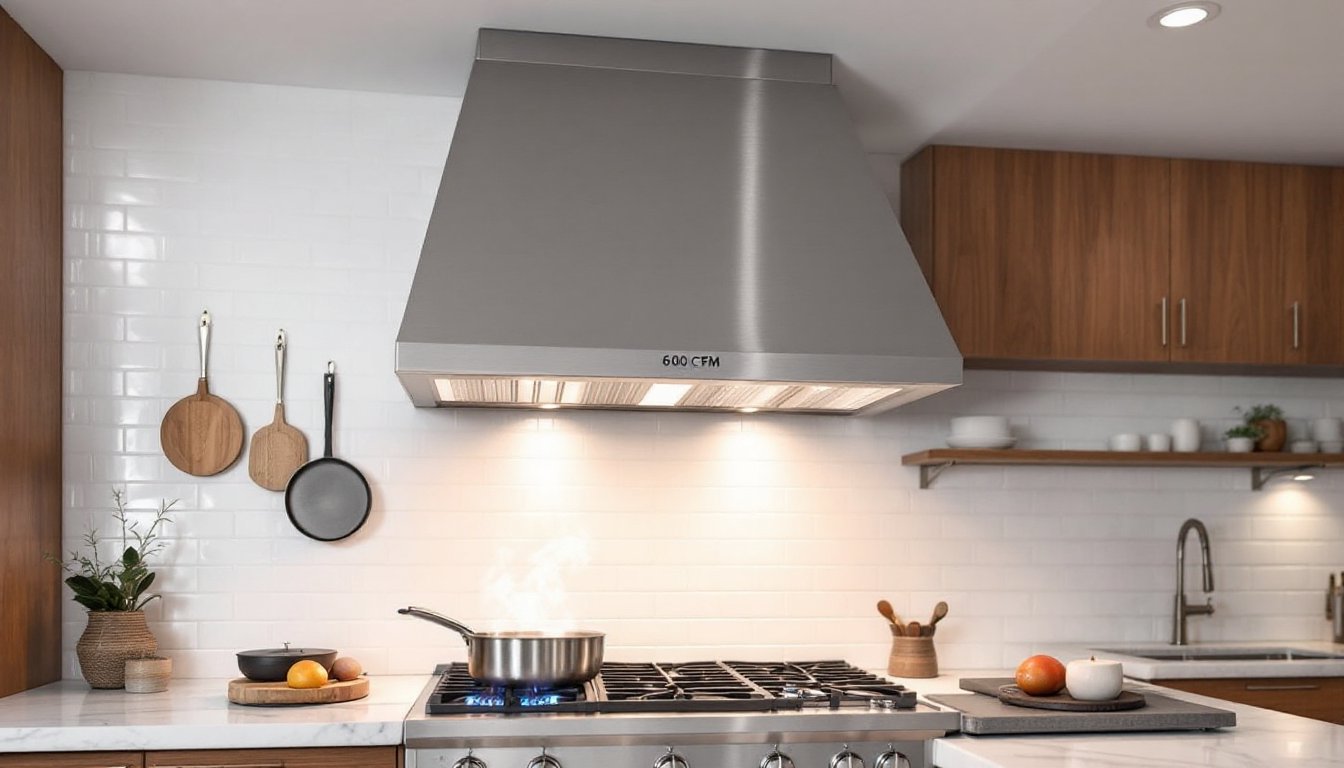
ToggleIf you cook frequently, especially with gas burners or high-heat methods like searing, stir-frying, or grilling indoors, your kitchen needs serious ventilation. A 600 CFM range hood moves 600 cubic feet of air per minute, clearing smoke, grease, and combustion byproducts faster than standard models. It’s a workhorse tier, positioned between residential mid-range hoods and commercial-grade systems. But it’s also overkill for some kitchens and underpowered for others. This guide walks through what 600 CFM actually delivers, when it’s the right call, what features matter, and how to install and maintain it without turning your kitchen into a wind tunnel.
Key Takeaways
- A 600 CFM range hood moves 600 cubic feet of air per minute and is essential for gas ranges with 60,000+ BTU output, high-heat cooking methods, and island or open-plan kitchens.
- Ducted 600 CFM hoods outperform ductless models by completely removing moisture, grease, heat, and combustion gases, while ductless systems require charcoal filter replacement every 3-6 months.
- Proper mounting height (24-30 inches above electric cooktops, 28-36 inches above gas ranges) and adequate insulated 8-inch ductwork maximize capture efficiency and airflow performance.
- Running a 600 CFM hood at medium speed rather than full blast keeps noise between 2-4 sones, while full-speed operation produces 6-9 sones comparable to a vacuum cleaner.
- Regular maintenance—cleaning baffle filters every 2-4 weeks, inspecting ductwork annually, and checking the exterior vent cap twice yearly—prevents fire hazards and maintains peak performance.
- Jurisdictions requiring make-up air systems for hoods exceeding 400 CFM should consult a licensed HVAC contractor to avoid negative pressure issues that can backdraft furnaces or water heaters.
What Is a 600 CFM Range Hood and Why It Matters
CFM stands for cubic feet per minute, the volume of air the hood’s blower can move. A 600 CFM hood pulls 600 cubic feet of air through its filters and either exhausts it outdoors (ducted) or recirculates it through charcoal filters (ductless) every minute at maximum speed.
Why does this number matter? Because inadequate ventilation leaves grease on your cabinets, moisture on your walls, and combustion gases (like carbon monoxide and nitrogen dioxide from gas burners) in your breathing space. The Home Ventilating Institute (HVI) recommends matching CFM to your cooktop’s BTU output and your kitchen’s size. For reference, a standard 30-inch electric range might need 200-300 CFM, while a 36-inch gas range with 60,000+ BTU often requires 600 CFM or more.
Range hoods at this capacity typically serve 36-inch to 48-inch cooktops, especially gas models. They’re built with larger motors, wider ducts (usually 8-inch round or rectangular equivalent), and heavier-gauge materials to handle higher airflow and grease loads. Expect these units to weigh 50-100+ pounds and draw 3-6 amps, depending on lighting and motor configuration.
When Do You Actually Need 600 CFM of Ventilation Power?
You need this level of ventilation if your cooktop produces high heat or high BTU output. A general rule: divide total BTU by 100 for gas ranges. A 60,000 BTU gas range needs roughly 600 CFM. If you’re running a 36-inch range with six burners or a high-output professional-style range, 600+ CFM becomes essential for safety and performance.
Electric and induction cooktops generate less airborne combustion byproduct but still produce steam, grease vapor, and odors. A 36-inch induction cooktop can often get by with 400-500 CFM, but if you sear steaks, deep-fry, or cook with a wok regularly, the extra capacity of a 600 CFM model keeps your kitchen comfortable.
Kitchen size matters too. If your cooktop sits on an island (no walls to contain the plume), you’ll need 50-100% more CFM than a wall-mounted setup to compensate for cross-drafts. In open-plan layouts where the kitchen flows into a living area, a 600 CFM hood helps contain cooking odors before they migrate.
Finally, consider local building codes. Some jurisdictions require make-up air systems when you install hoods rated above 400 CFM to prevent negative pressure that can backdraft furnaces or water heaters. Check with your building department before committing to a 600 CFM unit.
Top Features to Look for in a 600 CFM Range Hood
Not all 600 CFM hoods perform equally. Look for multi-speed blowers with at least three settings. You won’t run full blast for simmering pasta: variable speed lets you match airflow to cooking intensity and keeps noise manageable.
Baffle filters are the professional standard. They’re stainless steel, dishwasher-safe, and channel grease more efficiently than mesh or aluminum filters. Expect them in most quality 600 CFM models. Some units add a grease cup or collection tray beneath the blower, this catches runoff and simplifies cleanup.
Lighting should be LED, with at least 200 lumens per bulb. Dimmable LEDs are a bonus for ambient lighting. Avoid halogens: they generate excess heat and burn out faster.
Look for electronic or touch controls rather than mechanical switches. They’re easier to clean and less prone to grease buildup. Auto-shutoff timers and delay functions (which run the blower for 5-10 minutes after you finish cooking) help clear residual smoke and odors.
Ducted vs. Ductless: Which Configuration Works Best?
Ducted (vented to the outside) is always the better option for a 600 CFM hood. It removes moisture, grease, heat, and combustion gases entirely. Ductwork should be 8-inch diameter rigid metal (galvanized steel or stainless) with as few bends as possible. Every 90-degree elbow reduces airflow by roughly 25 CFM: long duct runs or flexible duct can cut effective CFM by half.
Plan your duct route before buying. Maximum duct length varies by model, but most 600 CFM hoods can handle 30-50 linear feet of straight run, minus reductions for elbows. The duct should terminate outdoors with a wall or roof cap equipped with a backdraft damper to prevent wind from reversing airflow.
Ductless (recirculating) uses charcoal filters to strip odors, then blows air back into the kitchen. It’s a fallback for condos or rentals where ducting isn’t allowed. But it doesn’t remove moisture or heat, and charcoal filters need replacement every 3-6 months. A 600 CFM ductless hood still moves air, but it won’t improve air quality the way a ducted system does.
Installation Considerations for 600 CFM Models
Mounting height matters. The bottom of the hood should sit 24-30 inches above an electric cooktop and 28-36 inches above a gas range. Lower improves capture efficiency, but too low creates a head-knock hazard and can overheat the hood’s internals.
Most 600 CFM hoods require dedicated 120V electrical circuits. Some high-end models need hardwiring rather than a plug-in connection. If your hood includes a blower upgrade or auxiliary features (like heat lamps), confirm amperage with the specs.
For wall-mount chimneys, you’ll fasten a mounting bracket to wall studs, then hang the hood and adjust the chimney cover to meet your ceiling height. Island hoods require ceiling joist anchoring, often with threaded rods or a support frame. Both setups usually need two people, these units are heavy and awkward to position solo.
Ducting through an exterior wall is simpler than running duct vertically through a roof, but roof venting can be shorter and more direct. Either way, seal duct joints with foil tape (not fabric duct tape, which degrades) and insulate duct runs passing through unconditioned spaces to prevent condensation.
If your hood exceeds 400 CFM and you live in a tightly sealed home, you may trigger negative pressure issues. The International Residential Code (IRC) and many local amendments require make-up air when exhaust exceeds 400 CFM. A make-up air system introduces fresh air to balance the exhaust: it can be passive (a motorized damper) or active (a dedicated fan). Consult a licensed HVAC contractor if you’re unsure.
Permits vary. In most jurisdictions, installing a range hood doesn’t require a permit if you’re replacing an existing unit on the same electrical circuit and duct route. New ductwork, adding a circuit, or installing make-up air usually does. Check with your local building department.
Noise Levels and How to Manage Them
Sones measure perceived loudness. A whisper is about 1 sone: normal conversation is around 4 sones. Most 600 CFM hoods run between 6-9 sones at full speed, which is noticeably loud, think vacuum cleaner territory. At lower speeds, expect 2-4 sones.
To keep noise tolerable, look for models with internal or in-line blowers. Internal blowers sit inside the hood and are noisier but easier to install. In-line (remote) blowers mount in the attic or outside, moving motor noise away from the kitchen. They’re quieter in the room but cost more and complicate installation.
Insulated ductwork and vibration-dampening mounts also help. Some manufacturers include rubber grommets or foam pads between the blower housing and the hood body to reduce resonance.
Another tactic: buy a hood rated for higher CFM than you need and run it at medium speed. A 900 CFM hood running at 60% will move the same air as a 600 CFM model at full blast but do it more quietly because the motor isn’t working as hard. This approach costs more upfront but pays off in everyday comfort.
Platforms like This Old House often cover sound-reduction techniques for kitchen ventilation during renovation projects, especially in open-concept homes where noise travels.
Maintaining Your 600 CFM Range Hood for Peak Performance
Clean baffle filters every 2-4 weeks if you cook daily. Pull them out (most slide or unlatch) and run them through the dishwasher or hand-wash with degreasing dish soap and hot water. Let them dry completely before reinstalling. Grease buildup restricts airflow and creates a fire hazard.
Wipe down the hood’s exterior and interior surfaces monthly. Use a degreaser or a mix of dish soap and warm water, then dry with a microfiber cloth. Stainless steel benefits from a dedicated stainless cleaner or a drop of mineral oil to restore shine and resist fingerprints.
If you’re running ductless, replace charcoal filters every 3-6 months, depending on cooking frequency. These aren’t washable: once saturated, they stop absorbing odors. Set a calendar reminder so you don’t forget.
Inspect ductwork annually. Over time, grease can accumulate in ducts, especially near bends. A professional duct cleaning service (the same folks who clean dryer vents) can handle this. For severe buildup, a rotary brush attachment on a drill works, but be gentle, metal duct dents easily.
Check the exterior vent cap twice a year. Bird nests, leaves, and ice buildup can block airflow. Make sure the backdraft damper moves freely.
Test the blower periodically at all speed settings. If you notice reduced suction, unusual vibration, or grinding sounds, inspect the motor and fan blades. Grease on the blades throws them out of balance: a thorough cleaning usually fixes it. If the motor itself is failing, replacement parts are available for most mid-range and up models, but labor can run $200-400 if you hire it out.
Finally, keep your cooktop clean. The less grease you splatter, the less your hood has to capture. It’s a small habit that extends filter and blower life significantly.