
Table of Contents
ToggleScoring a free washer and dryer isn’t just about luck, it’s about knowing where to look and when to act. Whether you’re outfitting a rental property, furnishing a basement apartment, or simply need a backup set, free appliances are out there. People upgrade, move, or inherit extras constantly, and many would rather donate functioning units than pay disposal fees. The key is timing, persistence, and a clear game plan for hauling them home safely. This guide walks through the most reliable sources for free washers and dryers, what to inspect before loading them into your truck, and how to handle transport and hookup without wrecking your back or your floors.
Key Takeaways
- Facebook Marketplace and Buy Nothing groups are your fastest sources for free washer and dryer near you, with popular items disappearing within an hour of posting.
- Test the appliance before pickup by running a cycle and inspecting hoses, drums, and vents to avoid costly repairs or water damage after transport.
- Check washer and dryer age, model number, dimensions, and hookup requirements before committing to pickup—a 12-year-old unit may work today but fail within a year.
- Use an appliance dolly with stair-climber wheels, ratchet straps, and a truck to safely transport 150–200-pound units while protecting your floors and doorways.
- Municipal bulk-pickup nights and estate cleanouts offer goldmine opportunities for free appliances, especially if you’re willing to curb-shop the evening before collection.
- Run a test load immediately after hookup and use stainless-steel braided hoses and rigid metal vent ducting to ensure long-term safety and performance.
Why People Give Away Free Washers and Dryers
Most free washers and dryers hit the market because someone’s upgrading, not because the old set is junk. Homeowners replace working appliances when they remodel kitchens or laundry rooms, switch to high-efficiency models for utility rebates, or match new finishes. Landlords often pull functional units from rentals during turnover to install coin-op or newer models that attract higher rents.
Estate cleanouts are another major source. When families settle an estate or downsize elderly relatives, they often need to empty a home fast. Paying for appliance removal can cost $75–$150 per unit in many markets, so listing them as free pickup is quicker and cheaper.
Relocations drive giveaways too. Cross-country movers face freight costs that exceed replacement value, especially for older top-load washers or bulky dryers. Military families on PCS orders and corporate transferees frequently post free appliances rather than ship them. College students and recent grads also offload hand-me-downs when they move into furnished apartments or back home.
Where to Find Free Washers and Dryers Locally
Online Marketplaces and Community Platforms
Facebook Marketplace and local Buy Nothing groups are the highest-volume sources as of 2026. Buy Nothing operates as hyper-local gift economies, members post items for pickup only, no money changes hands. Search for groups covering your ZIP code or neighborhood: most metros have dozens. Response time matters: popular items disappear within an hour of posting, so enable notifications.
Craigslist’s “Free” section still works, but expect stiff competition. Refresh the page every 30 minutes during peak posting hours (evenings and weekends). Scammers are rare in the free section, but always verify the address before driving over.
Nextdoor connects you with immediate neighbors. Posts often go to people within a few blocks first, giving you a geographic advantage. The platform also surfaces estate sales and moving announcements where budget-friendly home upgrades are common discussion topics.
Freecycle is a dedicated reuse network with city-specific email lists. Members post “Offer” and “Wanted” messages. Volume varies by city, larger metros see daily appliance posts, while rural areas may only surface a free washer every few weeks.
Local Programs and Nonprofit Organizations
Habitat for Humanity ReStores occasionally receive washer and dryer donations, but they rarely give them away for free. Most stores sell appliances at steep discounts to fund home-building projects. Still, some locations run monthly giveaways or offer units to families referred by partner agencies, call your nearest ReStore to ask about their policy.
Municipal bulk-pickup days are goldmines if you’re willing to curb-shop. Many cities schedule quarterly or seasonal large-item collection. Residents set out working appliances the night before pickup because they don’t want to store them. Drive through neighborhoods the evening before collection starts: bring gloves, a dolly, and a friend. Verify local ordinances, some municipalities prohibit scavenging from curbside piles.
Churches and community aid organizations sometimes receive appliance donations they can’t store long-term. Lutheran Social Services, Catholic Charities, and similar groups may offer appliances to families in need or allow volunteers to claim surplus items. Eligibility often requires proof of low income or referral from a caseworker, but policies vary widely.
Appliance retailers and repair shops occasionally have trade-ins or units pulled from delivery jobs. Big-box stores rarely give away trade-ins due to liability concerns, but independent repair techs sometimes post free washers with minor issues, broken timers, cosmetic damage, or models they can’t source parts for. These often need basic troubleshooting or component replacement, so they’re best for DIYers comfortable with appliance repair.
What to Check Before Taking a Free Washer or Dryer
Test before you load. If the appliance is still hooked up, ask the owner to run a short cycle. For washers, watch for leaks around hoses, door seals, and the bottom of the tub during fill and spin. Listen for grinding, squealing, or loud thumping, common signs of worn bearings or unbalanced drums. For dryers, confirm the drum rotates smoothly and the heating element or gas burner ignites. A dryer that tumbles but doesn’t heat often has a blown thermal fuse ($8–$15 part) or clogged vent sensor.
Inspect hoses, cords, and vents. Check washer fill hoses for cracks, bulges, or rust on the crimped ends. Replacing them costs $10–$20, but old hoses cause thousands of dollars in water damage annually. Dryer power cords must match your home’s outlet, three-prong (older homes) or four-prong (post-1996 NEC code). If the cord is missing or wrong, budget $25–$40 for a replacement: never use an adapter.
Look for rust and mold. Surface rust on washer cabinets is cosmetic, but rust inside the drum or around the door seal indicates leaks or poor drainage. Mold in front-load washer gaskets is common and cleanable with diluted bleach, but heavy mold throughout the drum suggests the unit sat wet for months, a red flag for internal corrosion.
Verify dimensions and hookups. Measure your laundry space before pickup: standard washers and dryers are 27 inches wide, but some compact or European models run 24 inches. Depth varies from 28 to 34 inches. Confirm whether your dryer hookup is electric (240V) or gas, you can’t convert between fuel types without major work. Check that door-swing direction works for your layout: some models allow hinge reversal, others don’t.
Ask about age and model number. Washers and dryers average 10–13 years of lifespan. A 12-year-old free washer may work fine today but need a $300 transmission or motor next year. The model number (usually inside the door or on the back panel) lets you search recall databases and parts availability. Avoid units with open recalls, especially dryers, which pose fire risks.
How to Transport and Install Your Free Appliances
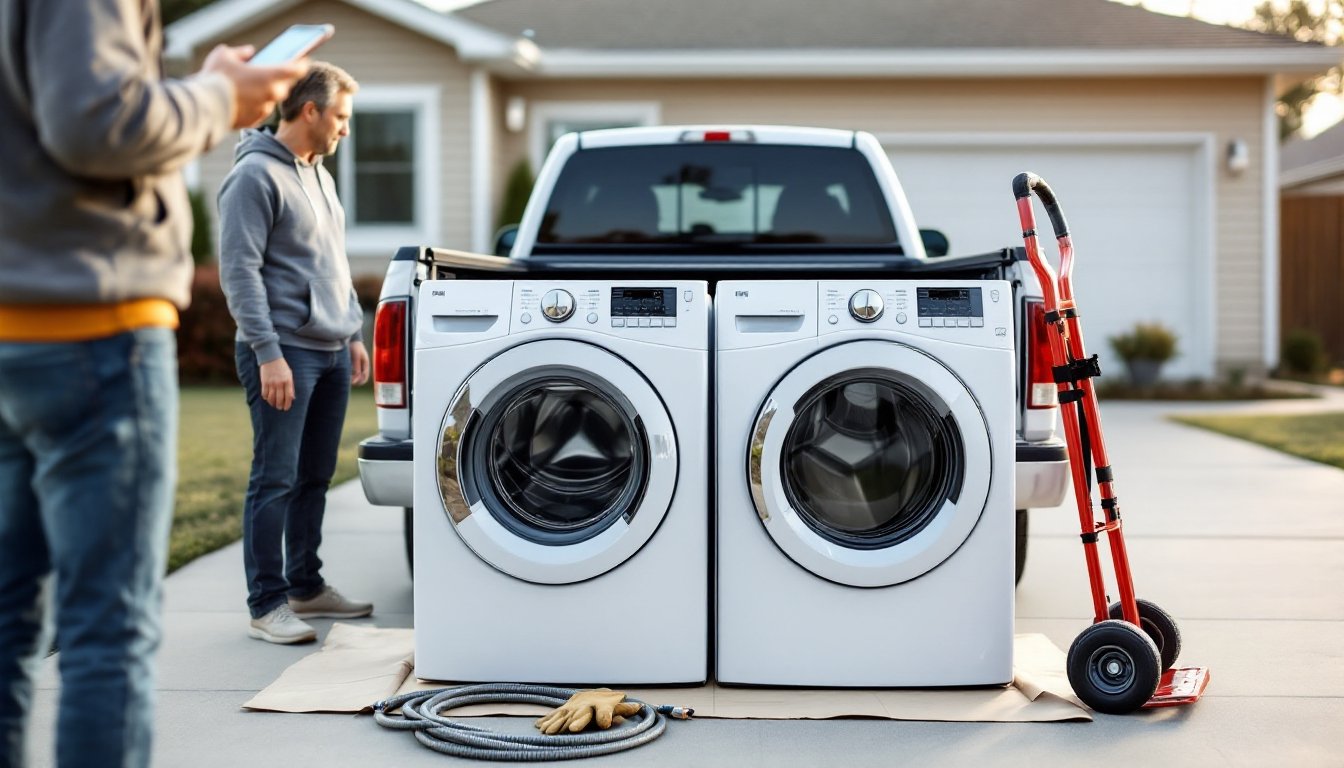
Rent the right vehicle or truck. A standard washer or dryer weighs 150–200 pounds. A pickup truck with a 6-foot bed handles either appliance upright or tilted. If using an SUV or van, tilt units no more than 45 degrees and secure them with ratchet straps to prevent tipping. Front-load washers should stay as upright as possible to avoid damaging suspension springs: top-loaders tolerate tilting better. Home Depot and U-Haul rent trucks for $19–$29 for 75 minutes, often cheaper than hiring a delivery service.
Use an appliance dolly and moving straps. A standard two-wheel dolly works for short distances on smooth floors, but an appliance dolly with a strap and stair-climber wheels ($40–$60 to buy, $10–$15 to rent) is worth it for stairs or rough terrain. Forearm lifting straps distribute weight across your core and legs, reducing back strain. Never solo-carry a washer or dryer, appliances are top-heavy and easy to drop. If you’re uncertain about heavy lifting, hiring local appliance installers typically costs $75–$150 and includes haul-away of your old unit.
Protect floors and doorways. Lay down hardboard or cardboard runners along your path to prevent scratching hardwood, tile, or vinyl. Measure doorways and hallways first, standard interior doors are 32 inches wide, but older homes may have 30-inch openings. Remove appliance doors if clearance is tight: most washer and dryer doors pop off with a screwdriver and two minutes of work.
Hookup and first-run checks. For washers, attach new stainless-steel braided hoses (not the old rubber ones) to hot and cold valves. Hand-tighten, then add a quarter-turn with pliers, overtightening cracks plastic fittings. Level the washer using a bubble level and adjustable front feet: an unlevel washer walks during spin cycles and wears bearings faster. For electric dryers, ensure the 240V outlet matches the cord type and is on a dedicated 30-amp circuit. Vent dryers to the exterior using rigid metal duct (not flexible foil or plastic), with runs under 25 feet and minimal 90-degree bends per IRC code. Clean the vent terminus outside and confirm the flapper opens freely.
Run a test load immediately. For washers, use a small load of towels and watch for leaks at hose connections, under the unit, and around the door. For dryers, check that exhaust air flows strongly from the exterior vent and that the drum doesn’t squeal or thump. If you notice issues, many are DIY-fixable with parts from appliance-supply retailers or YouTube tutorials, a thermal fuse, door latch, or inlet valve runs $10–$40 and typically requires only a screwdriver and a continuity tester.
Conclusion
Finding a free washer and dryer near you is part timing, part hustle, and part knowing how to verify what you’re getting. The appliances are out there, estate cleanouts, upgrades, and relocations keep a steady stream flowing through online marketplaces and community groups. Test before you haul, measure your space, and don’t skip the safety checks. With a dolly, a truck, and a methodical approach to hookup, you can walk away with a perfectly functional laundry set for nothing but your time and a little sweat equity.